More from the Cuckoo Line

Albert Einstein’s Special relativity indicates that a correspondent may experience relativistic time dilation when expecting the email and photographs they sent to be published within the same inertial frame of reference from the recipient’s standpoint. Or something.

This is the only way to explain the near three years that have elapsed since Matt Brown’s email(s) and photographs were transmitted to the TPAS HQ inbox. And, hand on heart, I’m not sure I even understood that first paragraph.

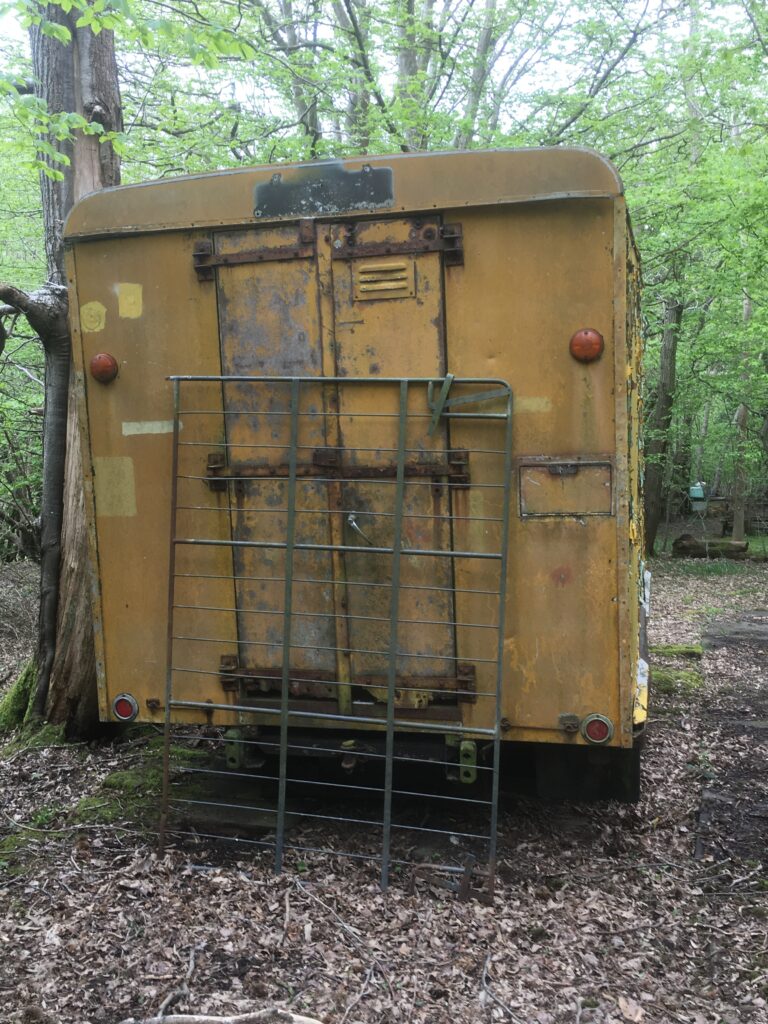
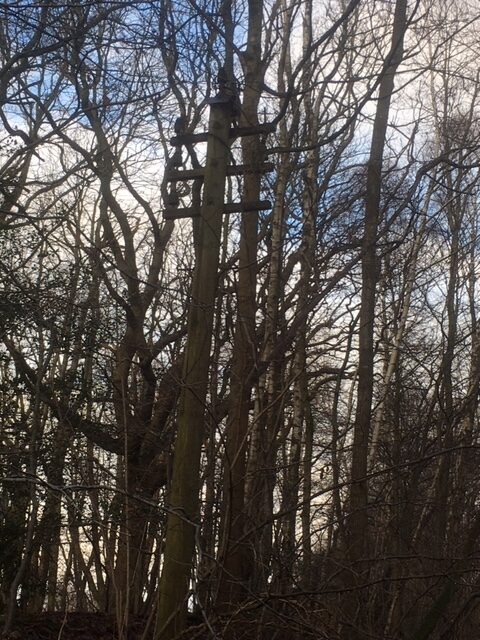
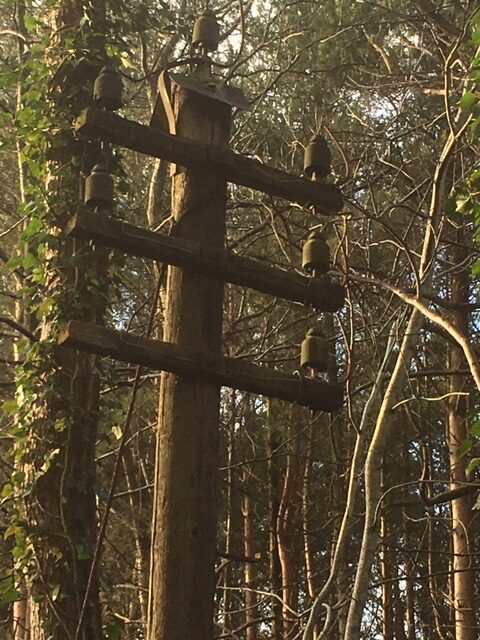
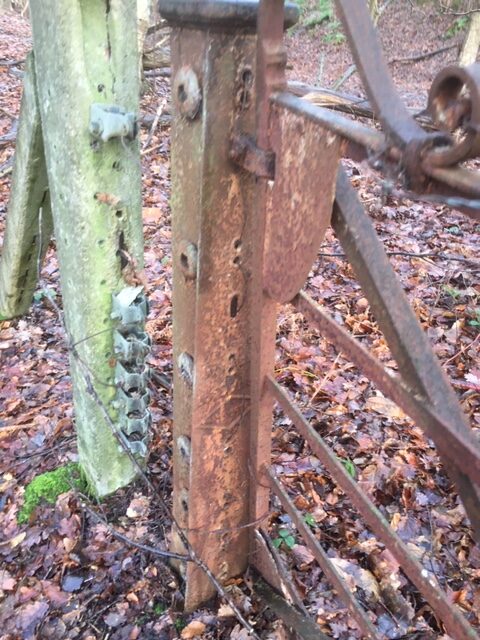
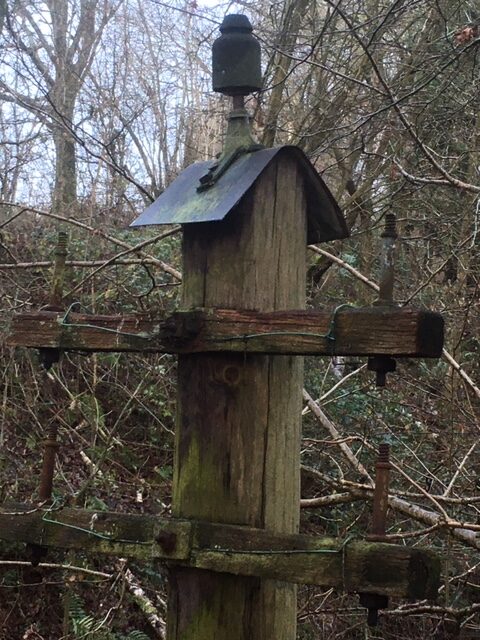
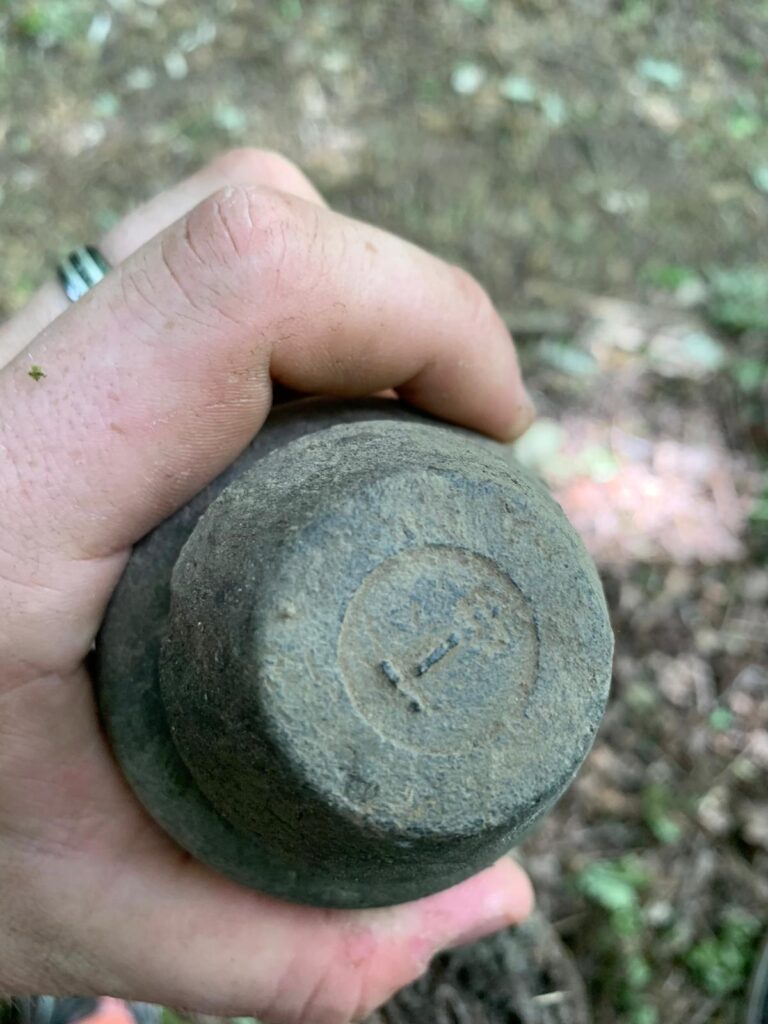
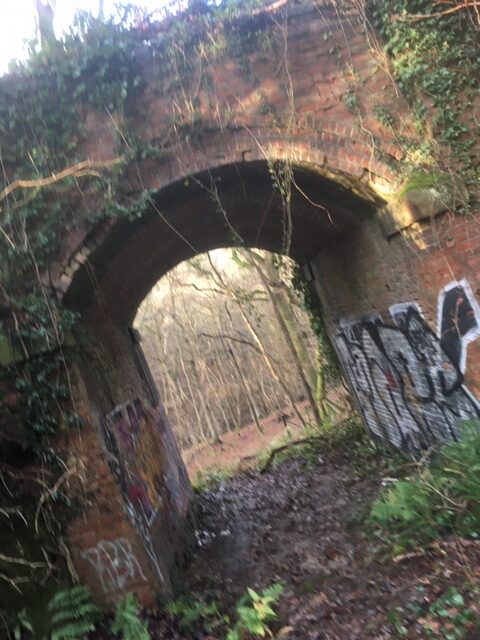
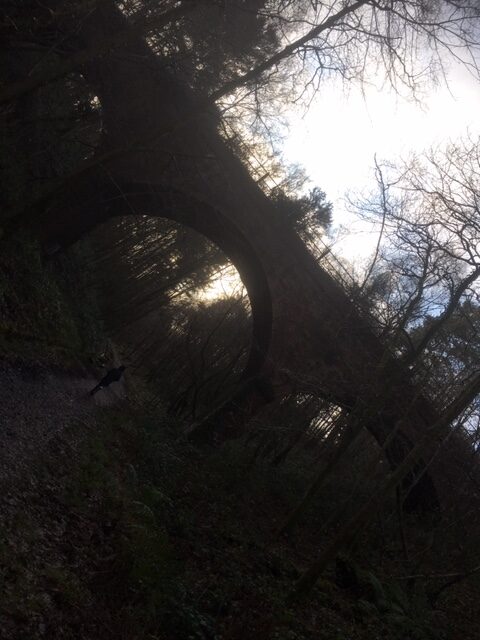
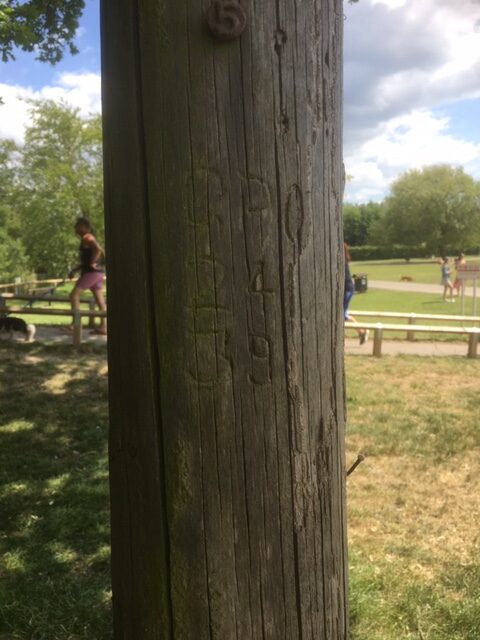
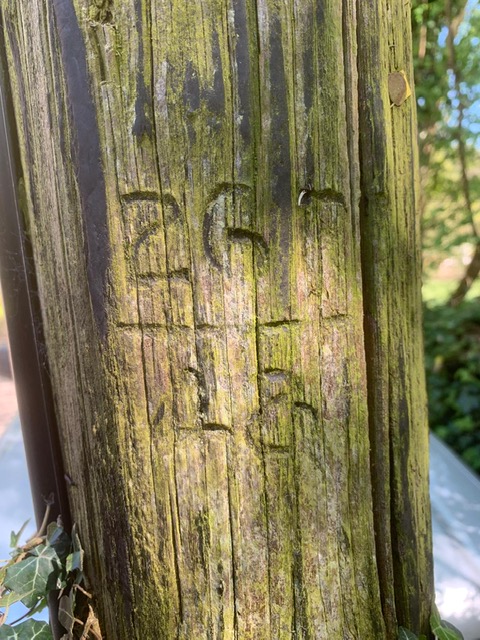
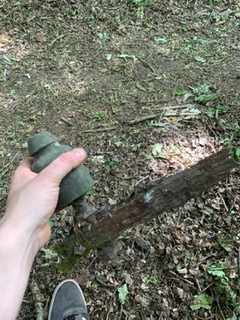
Matt and his family are regulars exploring ye Olde Cuckoo Line (click to see previous article on subject). Matt is also a car restorer and is rebuilding a GPO Morris van. Now, the photographs you see below are from a series of emails and so I will summarise them here. Most are serendipitous finds along said disused railway line and nearby woods down there in East Sussex. They are hunting for telegraphic artefacts for the making of their very own pre-1960’s garden pole. The yellow truck you see is a forest find GPO truck as once used by TV detectors et al. Other gems in these pics: An undated pole with a star shaped cut out where the date might be, A GPO crown transfer (presumably for the van restoration), a selection of spooky tunnels, culverts and iron railings and a couple of restored Morris van panels.

Not the best photographs in the world., arguably. And camera not in the steadiest hand in the world. With Dutch angles particularly on the tunnel shots. And arguably, not the highest resolution camera in the world. But we enthusiasts can find interest in pretty much anything. Thank you Matt. I imagine you must have finished that van by now.

A Nude Linesman in Oz

 I can’t believe how long it’s taken me to get this post up on to the website. Jerry Deacon, who sent this to me, can’t believe how long it’s taken either. And Jerry, I’ve just realised is none other than (previously plugged on here) Kilgraney Sleepers (now railwaysleepers.com) – the place to go for old railway sleepers (the clue is in the name) but also old and new telegraph poles for ornamental and nerdic use. Nice plug for you there Jerry; I trust that this is adequate recompense for my tardiness.

Anyway, back in March. Jerry wrote to tell us that as an intrepid explorer he came across Hamelin Pool Telegraph Station (1884) near Shark Bay in Western Australia. There is a definite passion for telegraph poles in Oz. In October 1872 the Overland Telegraph line between Darwin and Adelaide was completed, and the Australian telegraph network became linked directly to Europe (termite attacks notwithstanding). Hamelin station was established as a repeater station that linked Western Australia into this same network. And this is the last of these stations still extant. Now, for some reason, it features, quite prominently, a nude linesman attending to the pole top apparatus. Why this should be is anyone’s guess and Jerry offers no explanation, nor does anything at the station itself. Though he did suggest Nude Pole of the Month as a possible new feature for these very pages. I’m going to pretend he never said that.

Erection

I came this ‘ ‘ close to deleting an email I received this week with the subject line as above. I used to receive many such messages. Often accompanied by words like dysfunction, failure, problems etc. All the while extolling the virtues of some wonder pills guaranteed to make my wife happy. It’s well known in this household that a long trawl around a garden centre is far more likely to lighten Mrs TPAS’ countenance than anything I could swallow. I think. I hope!

Anyway, I have the curiosity of a small, hungry cat called Brian, and I noticed that this particular email also had a photo attached. So it is by the skin of all our teeth that I present to you this delicious telegraph pole courtesy of Euros Jones.

Euros is not one to waste words and the photo came with the simple caption:

Went through Aberangell last week and saw this pole being replaced.”

Aberangell is a village deep within the stunning gorgeousness of the Dovey hills, N.E. of Machynlleth. And just think what a coup it would have been had we also a photo of this old pole coming down and the new one going up as witnessed, alas uncaptured, by Euros. If I won the lottery I suppose I could always get them to re-enact it just for my not-at-all-obsessive benefit.

Anyway, I doff my cap firmly in Euros’ direction. He saw a pole being replaced and somehow managed to put his hands on the photo of it going up in the first place decades ago. I certainly couldn’t do that. And I don’t know many who could. Actually, I say I doff my cap, but truth is, the only headwear I ever wear is an Aberystwyth Town FC bobble hat. So next time I’m at the footy Euros, it’ll get doffed your way.

Black and white photo of a street scene in Aberangell, mid Wales, showing a GPO team putting up a four crossarm pole with great effort.

An Answer On a Postcard

Readers with a functioning memory will, of course, remember this story we ran 9 years ago: answers-on-a-postcard-please. To save you clicking and looking, I asked what the hell is this little salt pot thing I saw hanging beneath a power pole in a remote valley in mid Wales.

Well thanks be to Chris Morris from Newtown who was also wondering what these are and so took a pair of binoculars to find out. Turns out, they are Fault Passage Indicators. According to Chris they are completely wireless and detect faults by analysing the phase currents and their imbalance, by analysing the electromagnetic field(s).

For the really curious out there they are made by a company called Bowdens whose registered address is Spook Hill (I write this on Halloween – you couldn’t make this up).

This from their online catalogue of hard-core nerdy gadgets. I couldn’t find an “add to basket” button otherwise I’d have bought one and turned into a mug.

PATHFINDER 360 Alpha – Bowden Bros Ltd

Anyway, thanks Chris. I can now look to rebuild my life again after 9 years of restless, troubled nights not knowing what this thing was.

UK Patent #2522487

I’ve been rather lax in my updates of this good site lately. For which I apologise and for which I proffer excuses #3 & #12a. I realise that my tardiness in this respect has denied readers their regular ingestion of telegraphular intelligence but unless #12a *1 happens again, this neglect may or may not be repeated.

Now, Martin Cummins… There’s a man whose anorak is thicker than mine. Longer, stronger, more weatherproof, more anoracky, and with a rim of faux fur around the hood which serves no apparent purpose. Martin has dedicated almost his entire adult life to finding out what the little tubes are that stick up from the ground at the side of many telegraph poles.

My correspondence with Martin on this subject has been ongoing for many years and I feel it has reached zenith now as he introduces us to:

Front descriptive cover of UK Patent Application GB2522487 describing apparatus and method for measuring the depth of utility poles.

It’s funny how things seem so obvious once a UK patent application shows you how. But this doesn’t quite apply for me here. I’ve studied this document <read it in full here> and whilst, superficially it looks like it would be able to tell you how deep a pole was planted, I can just imagine that gauging pen snagging and snapping off at, if not the first, then the second, time you use it. This patent idea though does have the bonus in that it comes from God’s own country. I feel I ought to know the patentee.

A reminder of why we need “depthing tubes” in the first place came from John Scott to whom we are grateful. “These tubes have been fitted to the sides of poles since some silly pole installers decided due to digging and finding rock in their way, they would simply cut the butts off the poles and make it look like the poles were installed in the correct depth while some may have been installed less than a meter and thus endangering future engineers climbing the poles.”

Anyway, back to our original correspondent, Martin. I can’t help but wonder does he feel that life is complete – now that he’s found out what those little tubes are for what else is there? Such dogged determination needs a new purpose and I hope he finds it around the subject of telegraph poles.

Actually, here’s an idea. This conundrum Answers on a postcard please has been outstanding since 2012. Perhaps, Martin, you could dedicate the next part of your life to solving the “Saltpot Conjecture”. i.e. what the hell is one of these?

The world certainly needs tenacious folk like Martin Cummins. Anyway, he did also tell us about Basingstoke Museum, where they have an old GPO Maintenance Van, replete with everything to make you self-sufficient when lost in the Trossachs. It’s on my list of museums to visit before I die.

*1 #12a Abducted by aliens.

New Zealand P.O. Marital Aids

Low productivity levels among telegraph pole linesmen was causing serious concern among New Zealand P.O. bosses as the 1960s came to a close. Research led them to believe this was because of unhappy home lives and if they could somehow spice up marital harmony then this trend could be reversed.

A short-lived experiment ensued in which 120 pairs of No. 1 S&M kits were handed to linesmen across three districts: Rotorua, Auckland and Christchurch. They failed however to provide explicit instructions as to their intended use and the baffled pole engineers took them home to humour their bosses.

However by the end of the six month trial period productivity had actually increased in these key areas. Dramatically so in the case of Rotorua. It turns out that the enterprising linesmen had discovered that these fierce looking devices could be attached to their legs and thus enabled them to climb poles way quicker than they ever could using a ladder. Whilst the love lives of the workers hadn’t changed, their speed up a telegraph pole had accelerated four-fold.

Embarrassed bosses back-tracked and reported that this had been their intention all along and that “leg irons” should thenceforth be issued as standard to the workforce.

The set you see below was bought by Judy Pittman at a car-swap meet in Nelson, S. Island. She was delighted to learn the history of them from me but intimated she would be keen to sell them to any of our readers were interested in adding these fascinating love-aids to their paraphernalia collections. She would be happy to post to the UK but reports that postage would cost £36. If anybody is interested, do drop me a line to martin@telegraphpoleappreciationsociety.org and I will pass on your details.

Ye Olde Telegraph Apparatusii

This website is normally dedicated to telegraph poles with the emphasis on *poles* - tall wooden sticky-uppy things with wires all coming out of the top. But you cannot be  obsessive about these things without at least wondering what it's all for:
Mostly used as a support medium for Slimming World notices these days, telegraph poles once bristled with crossarms which carried sparky wires conveying messages charged with electromagnetic pulses in the form of morse code. And with all that went enormously varied hardware and a long and rich history.
A venn diagram of telegraph pole nuts (ahem!) and and telecommunication historians would surely have considerable overlap.
The photos you see below are from the collection of Marcos Raijer from N. Florida, USA. Now retired, he spent 40 years collecting this stuff and I'm told that his is a live telegraphic post that connects two morse stations. His plans are to demonstrate telegraphs to physics students.  This is a wonderful collection of some gorgeous apparatus.  Well worthy of a bus trip.  Thanks for sharing with fellow enthusiasts Marcos.
For a more fuller story about the history of the telegraph I recommend students of Telegraphpoleology consult my favourite tome on the subject "The Victorian Internet" by Tom Standage or they may also like to read the online book "Distant Writing" or our own rather less well informed wonky-table-leveller "Telegraph Pole Appreciation for Beginners".

Street hardware revisited.

posted in: Hardware

We’re side-stepping our remit a little here: tall, wooden, sticky-uppy, got wires coming out the top.  But here is a subject we’ve touched on before and seems to fascinate our listeners.  You will in no way remember these articles from 2012 on GPO Street furniture and More street furniture.

Well, Chris Payne, was digging around the internet, as you do, after he found this street marker set into a wall in Tring.  He found our pages, but also this one from the Secret Scotland blog. Now, he says this G.R. marker is on the B4635 roughly where the Western Road changes to Western Road.  But then Western road is already called Western road and I wonder did he mean to say it changes to something else.  But I’m too polite to write back and ask him and I certainly hate to correct someone.  It’s this anxiousness to please, to not offend, to be all things to all people that means I drink a bottle and a half of Gaviscon a day.  Anyway, so it’s on the B4635 in Tring.  And it’s got G.R. on it and I’d like one in my garden.  Thank you Chris.


An iron street marker post


Depthing Tubes

posted in: Hardware

We have, of late, been in extended communication with Mr Martin Cummins –  an engineer in permanent magnets and a man of considerably piqued curiosity – amply demonstrated to us now that Mr Cummins has turned his inquisitive mind to the mysteries of the telegraph pole.

A

I bear only a query regarding the grey plastic extruded ducts often seen, placed 180 degrees apart, on telegraph pole bases. After years pondering on same, I finally came to the conclusion that they were either for adding preservative at intervals (Hence cap sometimes seen) or possibly, but unlikely, as an anti-rotation device for where a replacement pole was a close fit in an existing hole – even providing access for a below-ground wood rot check.

Upon request, Mr Cummins furnished us with example photos.  He went on to tell us that his approaches to “Outreach” proved less than fruitless and nobody there had the faintest idea what these “depthing tubes” were for. Though why he thought a mental health charity would be able to help, when coincidentally, right next to them in the phone book he would have found “Openreach” and perhaps a far more illuminating phone call.

 Another depthing tube

He continued…

I have been told that it is a neat device for ensuring correct burial depth, even if the “Birth-line” is incorrectly stamped.  Is this the whole story? and was it an invention of the G.P.O? What is the correct name for the duct, and is the depth rod a purpose made, graduated scale, with perhaps a cursor to rest on the top of the tube, or just a piece of convenient bar, which is chalk marked? Presumably the reason for the height from ground-level is to discourage small children from gravel-filling (Caps as well) or is there another reason? Two tubes, I suppose, in case one gets crushed flat during installation? I have yet to see an article on this system?

Mr Cummins is very thorough in his research and determination to attain complete and total understanding of his subject.

While endeavouring to locate information on these ducts, I came across a reference to a spigot or flat circular mark called a “belly-button” being found on posts, which was put on the straightest side of the post. Perhaps another, humorous term for a birth-mark, but why it is orientated this way is beyond me. Another site refers to the birth-mark as a Doby mark. A strange term-any idea of its meaning?”

Mr Cummins also turned up a whole load of interesing telegraph pole patents; two shed loads about fibre-glass telegraph poles in Dunstable; a fine example of a telegraph pole preservative administering system near Leighton Buzzard; and another unponderable suggestion that BT may well fly kites to raise telephones line over a tree branch.

A telegraph pole armoured ductAll of this though makes me think that Martin is looking just too hard – reminding me of the story of the millions of pounds that NASA spent developing a biro that could write in the micro-gravity of earth orbit – whereas the Russians just took a pencil… You see, I think the answer is much more mundane in that these tubes are just “kick stops”, cable protectors – and nothing more. Intended to save the hardship caused by fluourescently clad council grass-strimming staff from slicing through the cables that run vertically down the pole and into underground ducts. On the left is one I photographed near home showing a protruding wire.  Those as witnessed by Martin Cummins simply being devoid of cable.

I am, of course,  just guessing, and respectfully ask some of the many Openreach and assorted telegraph pole types who frequent these esteemed pages to espouse some of their profound wisdom and tell us, and particularly, Martin Cummins, what the hell these things are for?

More street furniture

posted in: Hardware

Another iron marker post found in a street in PlymouthPrompted by the picture that Brian Russell sent in 5 posts ago, reader Ernie Stanton sent in the photo you see at left – one of three such cast iron marker posts he found in Plymouth.

He says :

A contact at Plymouth museum gave me your details following an enquiry I made to him. I have found three cast iron maker posts in Plymouth, similar to the one on your website.

These are however slightly different, in that they carry the letters GR and have a line under the ft in. From the condition of the one shown on your website, it seems that this may have fallen off the one photographed by Brian.

The three in Plymouth are however identical to each other and have a recess under the ft in into which numerals can be fitted.The combination of an arrow underneath the horizontal line reminded me of OS bench marks, which are traditionally carved into the faces of walls etc., but these are not shown on the OS maps I have, dated 1892/4. If you ever discover what they are I would be interested.

Well Ernie, I consider myself a bit of a dab hand at internet researching, but I’m struggling to find much about these posts. The GR in this case standing for George Rex (ages it to between 1910 and 1936) whilst Brian’s being from V.R.Victoria Regina (1837 – 1901).  I will continue to search, but I’m going to  guess aged water mains rather than anything telegraphic.

Meanwhile however, my detective brain did spot the darkening stain at lower left, and which continues on to the pavement and surrounding wall – indicative, perhaps, that a disrespectful dog may well have passed this way shortly before Ernie took his photo. 

Elementary!

1 2