Ukraine Poles

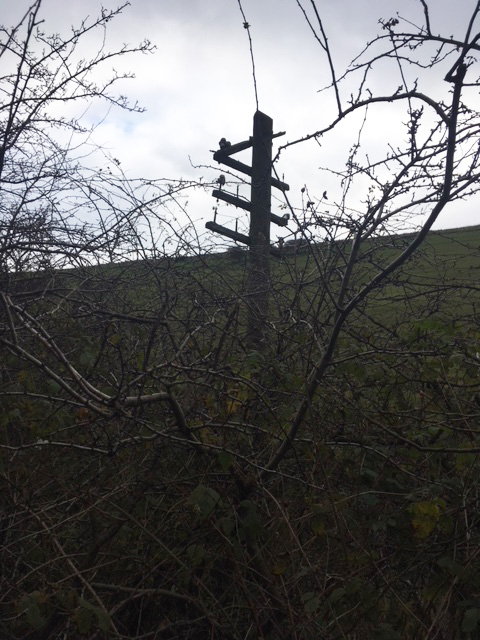
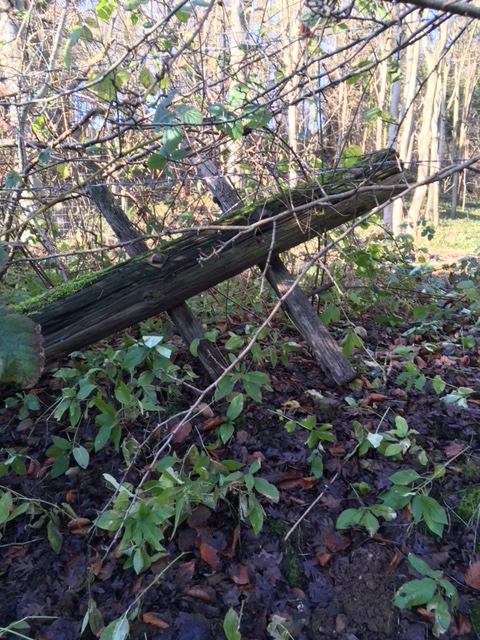
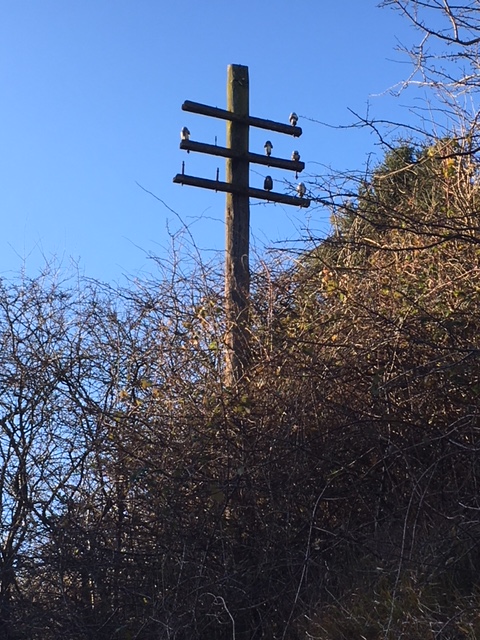
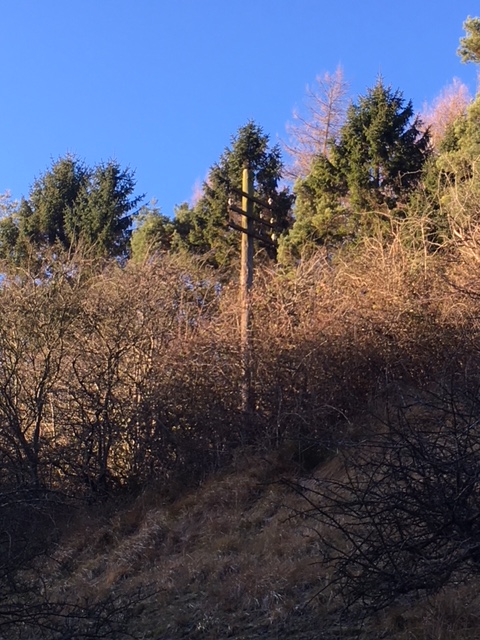
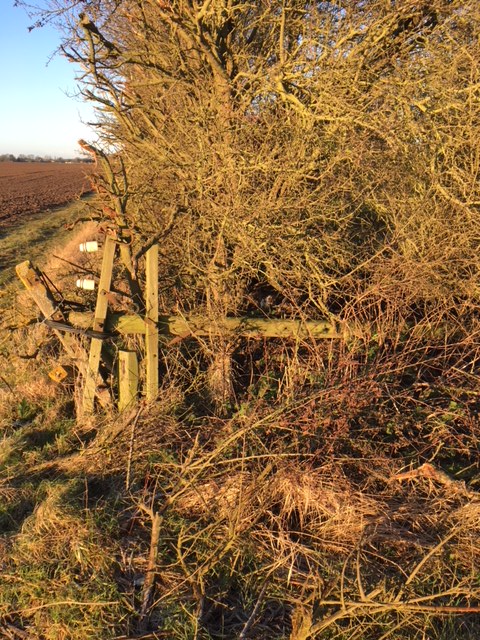
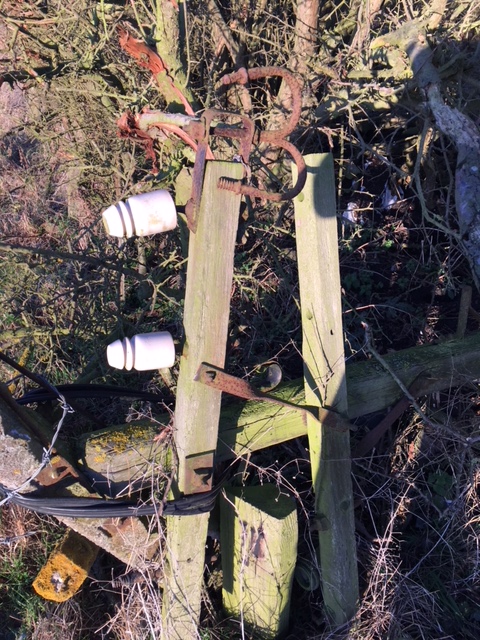
Just to prove that we’re not limited to poles in the UK & Ireland. Here are three make do and mend jobs from Cherkasy in Ukraine courtesy of Bruce Burrow. Looks a bit parky for my liking. What Bruce is doing out there is anyone’s guess. Anyway, titchy pictures I know – must be to do with the cold.

Pole Graveyard and…

The last of the calendars

What is it about telegraph poles and Scotland? Many of the finest extant poles can be found north of the border. And some of our most ardent telegraph pole appreciators are also from up there. Recent member William Brown sent in the photo below of a pole graveyard at Keith railway station yard. The picture, I must add, was taken by fellow new member, Mike Cooper. Official secrets and all that precludes me from telling you their membership numbers. But they are adjacent.

Apart from Keith being the name of my dad, it is a town that sounds like it should be in Aberdeenshire but is actually in Moray and is the geographical location where the A95 meets the A96. It’s also got a football team, a St. Rufus church and a Tooty’s Takeaway. And this pole graveyard of course. I’ve google street-viewed myself hoarse but haven’t been able to spot them. Seeing these expired five armers in rigor mortis I find deeply disturbing. I shouldn’t be looking at this picture so close to bedtime. And I’ve just had cheese.

Every cloud, as they say. Now that I’ve given the location away I can imagine busloads of insulator collectors turning up at some station somewhere asking to be taken to Keith and the conductor saying “He’s not working today.”

While I’m on, just 20 calendars left now. I’m supposed to be moving house so they have to go. Pic below of June by way of temptation.

A pile of dead telegraph poles. They are mostly poles with five arms and insulators.
A mockup of the June 2026 calendar page showing a pole between two mountains behind a large metal road bridge at Ballachulish.

Eunice, Serendipity & people named Jim

As I write, storm Franklin is thrashing around outside trying to outdo it’s older siblings Dudley and Eunice. The latter came through here two days ago showing 969 millibars (hectopascals) and scared the life out of me and the ridge tiles of my house. Said storm proceeded to wrestle to the ground a 250 year old lime tree in the field across the lane. That this tree has significance to us is beyond the remit of this post/page/website. The tree also fell onto a rusting dutch barn flattening what was left from a storm 3 years ago into a mangle of corrugated rust and retired and rotted telegraph poles.

Curiosity took me out there to inspect the damage. The tree was rotten mostly through and clearly wan’t long for this world anyway, wind or no wind. I was just about to retrieve a branch or two for the home hearth when I spotted a fully intact insulator lying on the top of the grass as though it had been left there just minutes before for me to find. Then I found two more, slightly more concealed. Much excited rationalising led me to conclude that they were somehow wedged into the tree as a byproduct when the poles were used to make the now planate barn. Serendipity* that Eunice should have lead me to them.

I thought of the title of this post way before I started writing anything. I felt sure that if I just kept writing I could think of some connection between someone called Jim and the happenstance of me finding some old insulators. Like you now, I realise this far into the post that it’s just not going to happen. I can’t think of any association. At all. Try as I might. But I’ve written the heading now and I’m not the sort of person to go back and change it. So cheers, to the Jims of this world. And to one in particular 😉 May you be Lucky Jim.

* not for the lime tree.

An Exhibition of Pole Photos by Member #0985H

Welcome to the TPAS virtual gallery. Wayne Firth is an honorary member of this society. He didn’t become such via the usual vulgarity of a cash donation delivered personally to my doorstep. Nor did he offer me a non-executive seat at some dubious investment company. And he didn’t marry my sister either.*1 Whilst these are all perfectly valid means of suffixing your membership with the esteemed “H”, Wayne went one better and used his position within the echelons of Openreach to access photos of poles of great interest. These he then sent to us under plain cover.

I’ve been hanging on to these for a while with the intention of spreading them out over a year. Truth is, my email inbox stretches off for over a mile now and so if I left it any longer then they may be lost to the silt at the bottom. (Apologies to those still waiting a reply from me for anything at all – don’t lose hope).

Anyway, thanks to Wayne #0985H for all these fabulous pole pics. Click a pic for full sized gallery.

*1 All are also valid, and oft used, means of acquiring peerage and/or PPE contracts.

PS the descriptive captions whilst seemingly blooming obvious… to the sighted, are from the alt text which we include with each image so as not to exclude so to speak…

Treasure Trove in ‘Ull

Regulars to these pages will, by now, know that Aaron Bailey (who has dropped the H from Hull*) is a regular rummager along deceased and non-deceased railway lines for telegraphular artefacts.  Indeed, he has a Pole of the Month (May 2018) to his credit.  There follows the photos from his latest jaunt - one in which his particular interest was poles that are attached to the side of railway bridges,

The round pole is on the side of a Hull and Barnsley railway bridge. He confesses to taking this photo from the queue at a drive through McDonalds (for goodness' sake)
The square pole is on the side of a viaduct on the Settle and Carlisle Railway whereupon he also found some insulators incl the LMS fatty you see here.
I really do envy urban dwellers this access to railway heritage.  I live so far from civilization that even the roads have petered out long before they get here. Denizens of these rural depths have been known to cross themselves whenever they see an aeroplane pass overhead and gasp excitedly when someone switches on one of these new electric light things.  Still, we keep being reminded that the 19th century is just around the corner.

* Must be a dialect thing

Telegraph Pole Restoration II

No prizes for guessing what Prof of Telegraphpoleology Jake Rideout is going to do with these bits and pieces recovered from his local salvage yard (Frome presumably).  I’m told this will be a freestanding garden folly sort of affair and we are promised photos of the progress and finished product.  Watch this space.  And if you’re up for a bit of Friday evening, just before the Archers, telegraph pole porn, you could do worse than check out Jake’s Youtube channel.

Two wooden crossarms and a collection of telegraph pole crossarms parts awaiting restoration A collection of telegraph pole crossarms parts awaiting restoration

Kentish Beach find

Stephen Poole from New Romney asked us to help identify the lump of wood you see below. Found on a beach on the south Kent coast and he thought it might be a ship’s mast. There were two support timbers linked with a metal bar that went through the pole. The markings are three crown symbols, the number 26 and a capital letter H. Somebody told him that it might be a telegraph pole.

Anyway, no point in having an Honorary Technical Adviser unless you’re going to bombard him with questions. And I happen to know that our H.T.A. T.P.A.S. Keith S**** is also on an eternal quest to find a pole butt with his initials on. And because he is likely every bit as old as the pole you see here, we just knew he’d have the answer:

“This is a 26ft stout pole, the growth rings very tight, certainly imported from Finland, British pines do not grow this slow,(the tighter the rings the slower has been the growth) species is Pinus Sylvestris ie. Scots Pine. Light poles had one crown, medium poles 2 crowns and stout poles had 3 crowns , a little unusual to find a stout ie. larger girth pole at this shorter length.

Some poles were imported from Russia but that was at about the time of the revolution and I have seen in the old GPO archives a report from a poles inspector, out there to buy poles, which describes violence in the streets,” I hied myself to a doorway for safety ” he reports.

The letter H is interesting – there would usually be the 2 initials of the inspector who accepted the pole,so probably before the time of even my older colleagues. I can go back to 1969. A shame that we cannot see the scribing at the ten foot mark which would give us a date. It looks free from rot but would be better preserved in the sea than in situ and in contact with the ground, so my guess (educated, but still a guess) would be sometime in the 50s.”

Thank you for that Sir Keith.  Anyway, speaking of beach finds, some time ago I was out jogging on a beach, probably on the south coast, and a wooden treasure chest stuffed with gold and jewels of immeasurable beauty and worth fell out of my pocket.  So if any detectorists down there (or indeed anywhere) come across any or all of this fabulous fortune – it’s mine, all mine I tell you.  And I can easily identify it – it’s shiny and has immeasurable beauty and worth.

The Telegraph Poler’s Brain

The amygdala is a small but important region within the frontal temporal lobe of the human brain. This dense bundle of nerve tissue is thought to be part of the limbic system, responsible for our emotional responses, memory and survival instincts. What is less well known is the role it plays in the proper appreciation of telegraph poles. A double-blind study by Scientists at University of Port Vale-Nil discovered that subjects with a strong emotional attachment to redundant telecommunications equipment experienced a surge in activity within the β-adrenergic and glucocorticoid receptors when exposed to images of telegraph poles or ceramic insulators. Subjects who had previously declared indifference to such things demonstrated no such activity.

So if you were to cut out a lid from the top of Aaron Bailey's head, plunge your hand into the warm, moist interior and rummage around in all the jelly and stuff for two distinctly almond-shaped pieces of brain you would be holding an organ positively fizzing with love for all things telegraphpoleic.

This thought passed through my own frontal lobe when Aaron, from Hull, wrote in to tell us about his recent insulator hunt along the disused Hull and Barnsley railway line. For here he discovered various olde telegraph poles both standing and grounded and in various stages of decay. Pictures below. Aaron has previously reported on HCT (Hull Corporation Telephone) poles but could find no markings or dates on these but did notice that they were thick as well as short. I should point out here that it was Aaron and not me who mentioned that this was also how the ladies of Hull preferred their menfolk.

Aaron also recommended the pole you see in the last two pics as possible POTM. This slim, moss-covered pole in a relaxed position is on the Hull to Withernsea line. Complete with two crossarms, a pothead insulator and, until recently, two perfect 1940 GPO double-groovers. These by strong coincidence are now to be found in a jug of vinegar in Aaron's workshop. From here they will likely spend eternity surging activity in Aaron's glucocorticoids.

Anyway, sadly, our rules disqualify this pole from the Pole of the Month competition. Rule 7a[i, iii, iv] states that a pole must be tall, wooden, sticky-uppy and wires all coming out the top. This pole clearly fails on the first count insomuch as due to it's low lying position it would be described as wide rather than tall. Bad luck Aaron.

And back to Hull again

posted in: Broken Poles

stop stoppress

Aaron, from Hull, two post ago, tells us he feels privileged to be on our website.  And that strangely, other than the pole recognition previously discussed he received no interest from his eBay listing.  This in its way is a good thing because now he has made this wonderful hanging basket hanger thingy for the remaining and significant 51% of his household.  In the finest traditions of Blue Peter – here’s what he did: 
(1)  Removed the bottom 2 cross-arms.
(2) Jet washed all the moss off.
(3) Attached a GR “no throwing stones” sign.
(4) Carefully banked the brownie points gained for future use.

A telegraph pole used as basket hangar in back garden in Hull.A telegraph pole used as basket hangar in back garden in Hull.

Enough to make a grown man cry

posted in: Broken Poles

I‘ve rattled on before about some of the lofty professorial types who frequent these pages – as much as anything to justify to Mrs TPAS that all these lonely hours spent in shed exile are in a worthy cause. And if David Kendrick (#609) had one of those Toblerone-shaped desk boards with all his academic qualifications listed at one character per inch, then he would need a board 7 ft 6 ins wide – and nearly 10 ft long if ’twere to include his name.  So when someone like that writes to you, you sit up.

Dear Martin,
Although many a time and oft’ I see poles that I am inclined to record upon my computing machine, it is rarely I find such a sad sight as this.
Near to Bromyard in the fair county of  Herefordshire, whist walking with a friend yesterday, we came across this sad, sad sight. The stub of a maliciously felled Cobra 1957 pole left languishing, but still firmly and proudly rooted,  in a field. I wonder if fellow members would wish to see this and to keep their eyes peeled for similar wanton destruction.
I remain, fraternally yours,
David.

That is indeed a sad sight David, and whilst I’m glad you brought it to our attention, I’m afraid I can offer you little by way of comfort. To those who don’t appreciate poles as we do (yes, they do exist) this is just a wooden sticky up thing that was probably getting in the way. You have to look at it like you would when you find a recently squashed hedgehog, sad, but it’s probably best to just put it out of your mind, go home and have a nice cup of tea in a Telegraph Pole Appreciation Society Mug (£8.99 inc p&p).

A Cobra 1957 placard on a telegraph poleA cut down pole with an arhaeologist crying over it
A multi-armed telegraph pole seen in Lincoln

Back at the beginning of 2011, you may remember I rescued some telegraph pole bits from a work-gang of telegraph pole executioners along the B5105 in North Wales. Well one of their gang, Ged McCarthy, remembered us, and via the wonders of the modern facebook age he sent us a pic of an amazing pole he saw in Lincoln. Well here it is. And much appreciated it is too. Ged is quite amazing insomuch as he writes in a broad Liverpool accent.

Now, as it’s Christmas and I find myself with some time, I have been perusing the wonderful Flickr photo streams for telegraph pole photos.  I never pinch any, I just appreciate them. And believe me, some people on there really get telegraph poles. See for yourself by clicking here.

Finally, if your name is Robin Hughes and you’re from Kent then you’re probably wondering when the hell I’m going to publish the fantastic photos of some ancient Tunbridge poles you sent. All I can say is sorry. I forget lots of things (these days) but I haven’t forgotten those.  Same goes for anyone who sends me stuff to publish – I do get them all up eventually.

Have a wonderful Telegraph Pole Appreciating Christmas everyone.

1 2