

These much ignored pieces of rural and urban furniture finally have a website of their own.
 This is not the site to visit for technical information pertaining to telegraph poles. You'll find nothing about 10KVa transformers, digital telephone networking or even so much as a single volt. This is a website celebrating the glorious everyday mundanitude of these simple silent sentinels the world over. We don't care what the wires contain either. They all carry electricity in some way be it the sparky stuff which boils your kettle, or the thinner stuff with your voice in it when you're on the phone.
TELEGRAPH POLE GOLD
Absolute gold struck here… You can tell it’s gold because I’ve used capital letters in the title – and that’s a first for these sage pages. Pete Gerrard, a mine of information on telegraph poles and friend of our incumbent Honorary Technical Adviser Keith S*****1 has sent us a copy of the 1933 publication “The Telegraph Pole” by W,H. Brent, B.Sc. (Hons.) A.M.I.E.E.
Now, I’ve seen odd pages from it in the past and posted them onto this here site. But here, and for your delectation, is all 32 pages of everything, literally everything, you ever wanted to know about telegraph poles. Pete says “I don’t think there is any confidentiality about it since BS1990 was written around the GPO Pole Specification, in fact it was the specification. It is a most definitive article and gives an incredible history of this ubiquitous but largely unknown about item of street furniture. There is much folklore surrounding its evolution and manufacturing process most of which is exactly that – folklore!”*2
It’s 42Mb fat which is a hefty download, but ultimately that’s only about the same as 3 loaves of wholemeal bread, or a box of Bran Flakes and a packet of cake mix. Click the cover below to start the teleportation process. ENJOY.

*1 Keith S**** signed the official secrets act so he’s a secret, or something.
*2 I reserve the right to continue to spout folklore via this website.
Juvenile Telegraph Poles
To become a member of our most esteemed and august society may be considered an honour. Membership is so exclusive that it is ONLY available to those who have £3 in their paypal account AND are able to click the button that says JOIN NOW. And this last week we were delighted to welcome new member #0739 Pete Gerrard aka “Treebore”.
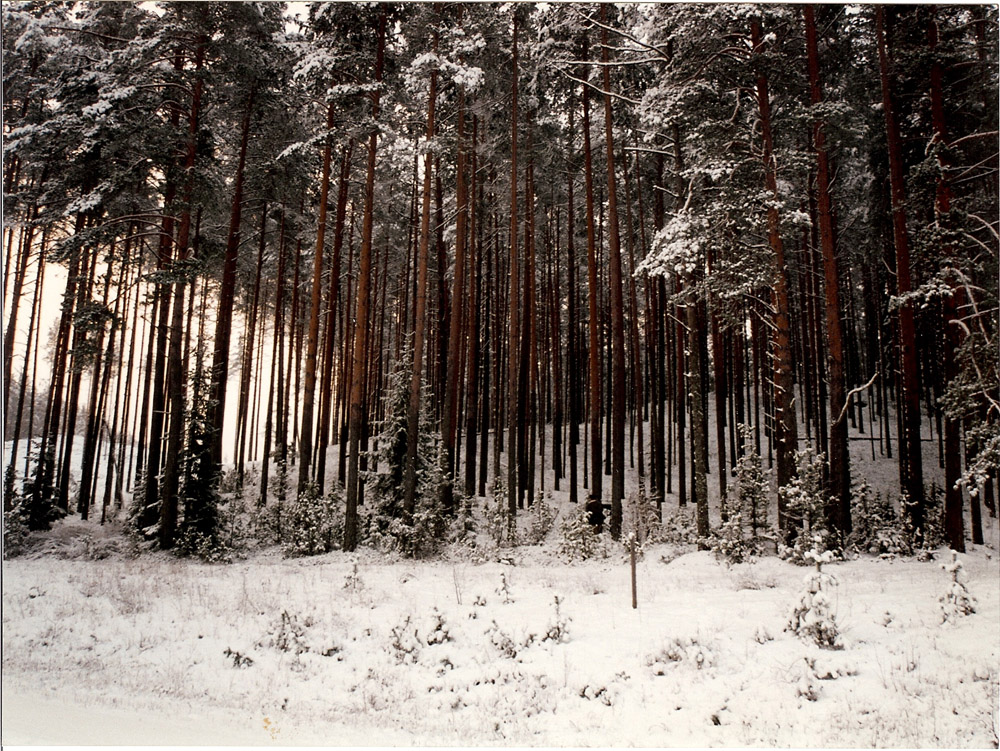
For Treebore has sent us the wonderful pics you see below. Pete says that in the 1970s he worked for the GPO producing telegraph poles from forest to delivery. He re-joined the industry in the 90’s working across Scandinavia, Russia and the Baltic States, And picture #1, taken in Estonia in 1997, is of a bunch telegraph poles before they knew they were telegraph poles.
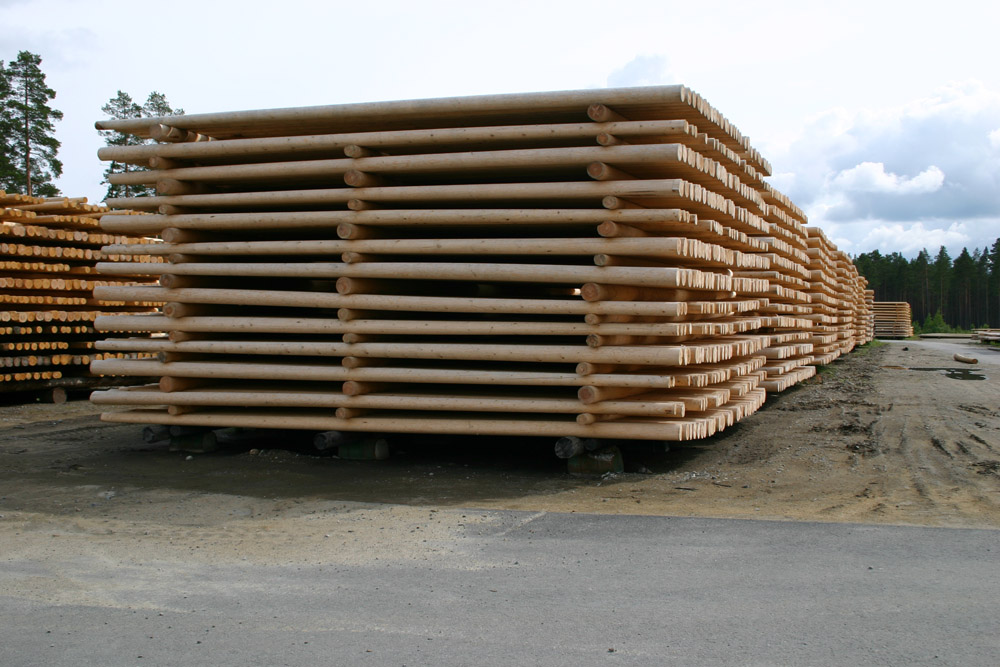
The second pic is a stack of blank telegraph poles near Burjholm Sweden awaiting their fate of being shipped to the UK for subsequent fabrication and creosoting.
And finally, a telegraph pole near Lake Lagoda Russia taken in November 1997. Treebore presumes that this being Russia, the missing stay pole has been cut for firewood.
Welcome to the Telegraph Pole Appreciation Society, Treebore. What took you so long?

As always, click the pictures to enlarge them.
Arty poles revisited
Many thanks to Sophie Jayne Howell for her recent email. Well March it was actually, but geologically, that’s microseconds. Anyway, Sophie said some lovely things about our website – that always keeps the delay in replying down to single years – but also that her darling father who once worked for British Telecom servicing the poles rambles fondly about creosote. That’s nice. Anyway, Sophie is clearly an appreciator of art as much as she is of, ahem, telegraph poles. She sent us these three images which frankly, are all gorgeous.
#1 & #2 are Simpsons inspired artworks by Tim Doyle – part of his “Unreal Estate” series. To quote Sophie here “…both of these have beautiful wiry sticky uppy-ey poles, covered in interesting looking squggly bits and big transmittery things. The poles loom in the twlight and just look lovely.” The 3rd picture is Richard Rigg’s ‘I forgot what was said when we were outside, stood empty, now without those words I fell back’ Installed in Leeds Art Gallery in 2011, it is two lovely big telegraph poles. In an art gallery, Telegraph poles, Art – you can’t get better than that.


Crimes against Telegraph Poles
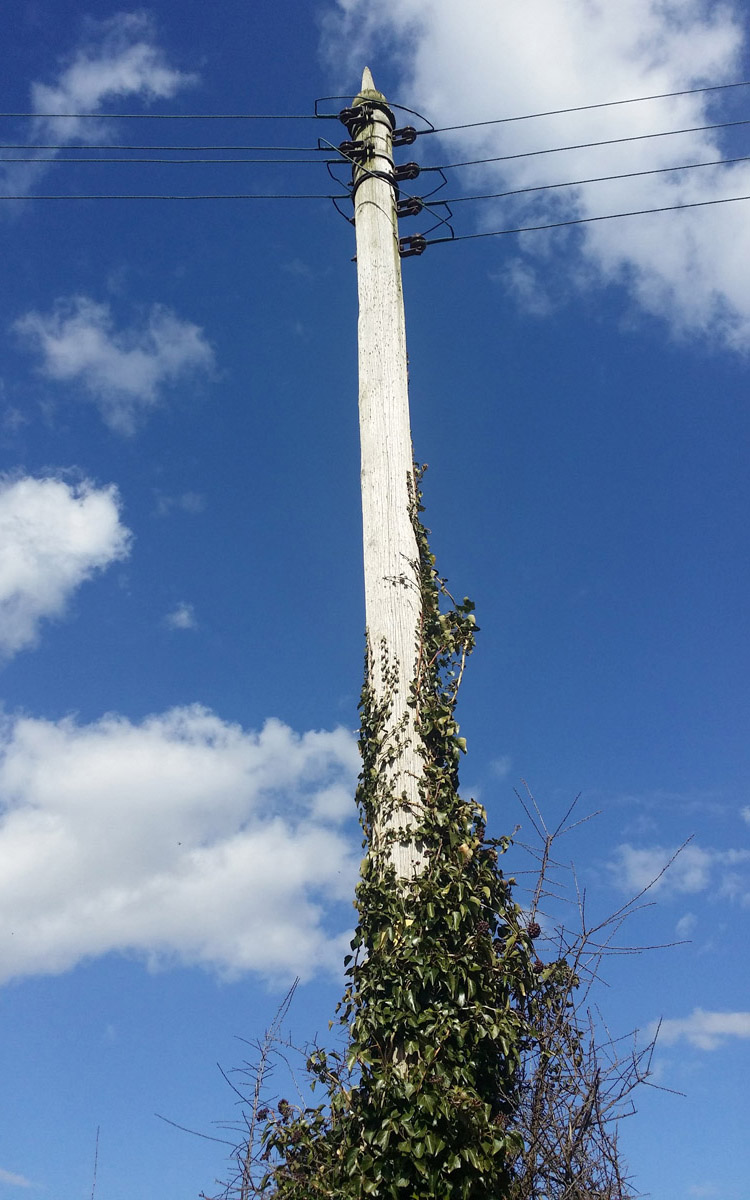
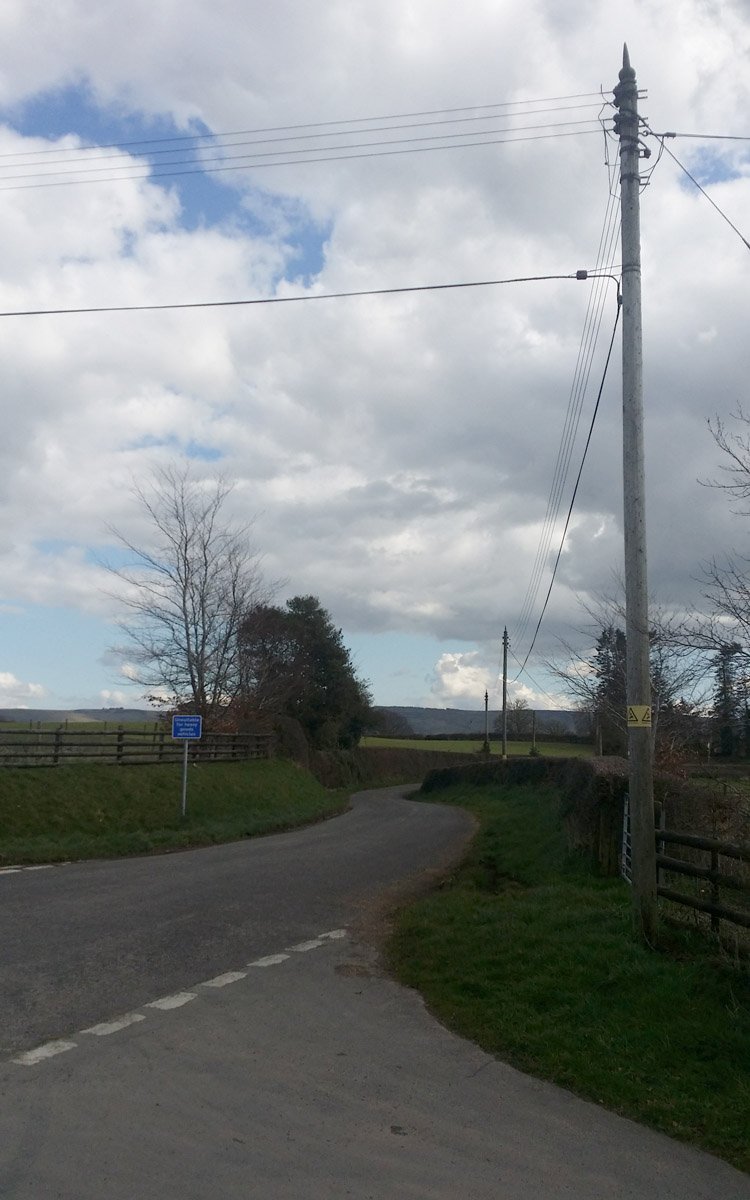
The week all started routinely enough. There I was busy appreciating the daily influx of photographs submitted by enthusiastic subscribers to these sagest of pages… including these finialed beauties. (Which have the look of South Shropshire about them) They came from an email address in hotmail which ought to have raised suspicions, if not hackles. No note was attached.
Things took a turn for the sinister when we received the following photograph a day later. From the same email address. And this time there was a note…

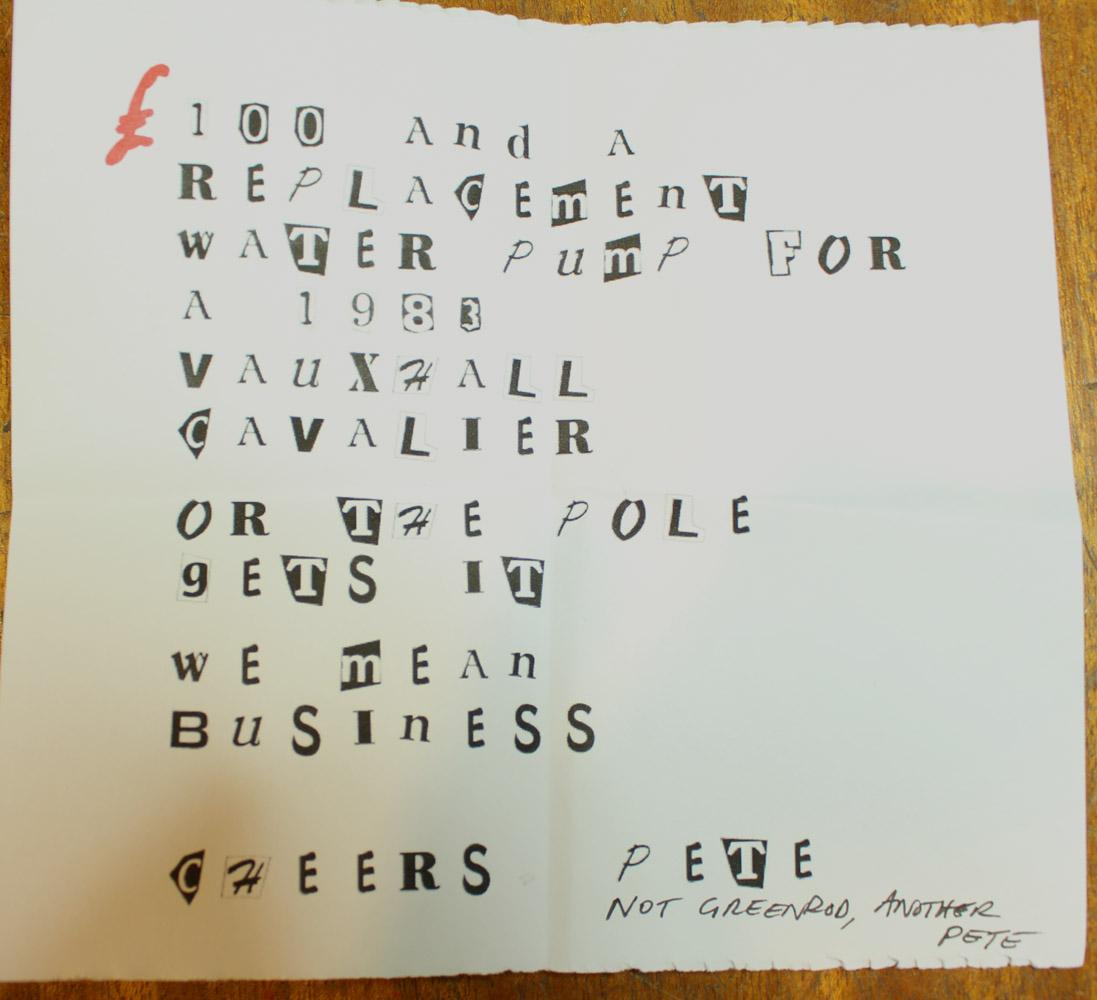
We were horror struck. Anybody who knows me would realise that if someone were to give me a penny, I still wouldn’t have two pennies to rub together. So even if I did somehow know the whereabouts of an ageing water pump I could never put my hand on that kind of money. So we had to play the waiting game.
Then I saw that the evil fiend had carelessly signed his name at the bottom and so I started to put two and two together. My mate Pete Greenrod has a broken-down Vauxhall Cavalier in the scrap yard he calls his garden and he has manky, stinking trainers like those in the picture. But then it couldn’t be him – I’m sure his is the 1984 model. And the ransom note specifically says that it’s not him anyway, it’s some other Pete. A red herring then.
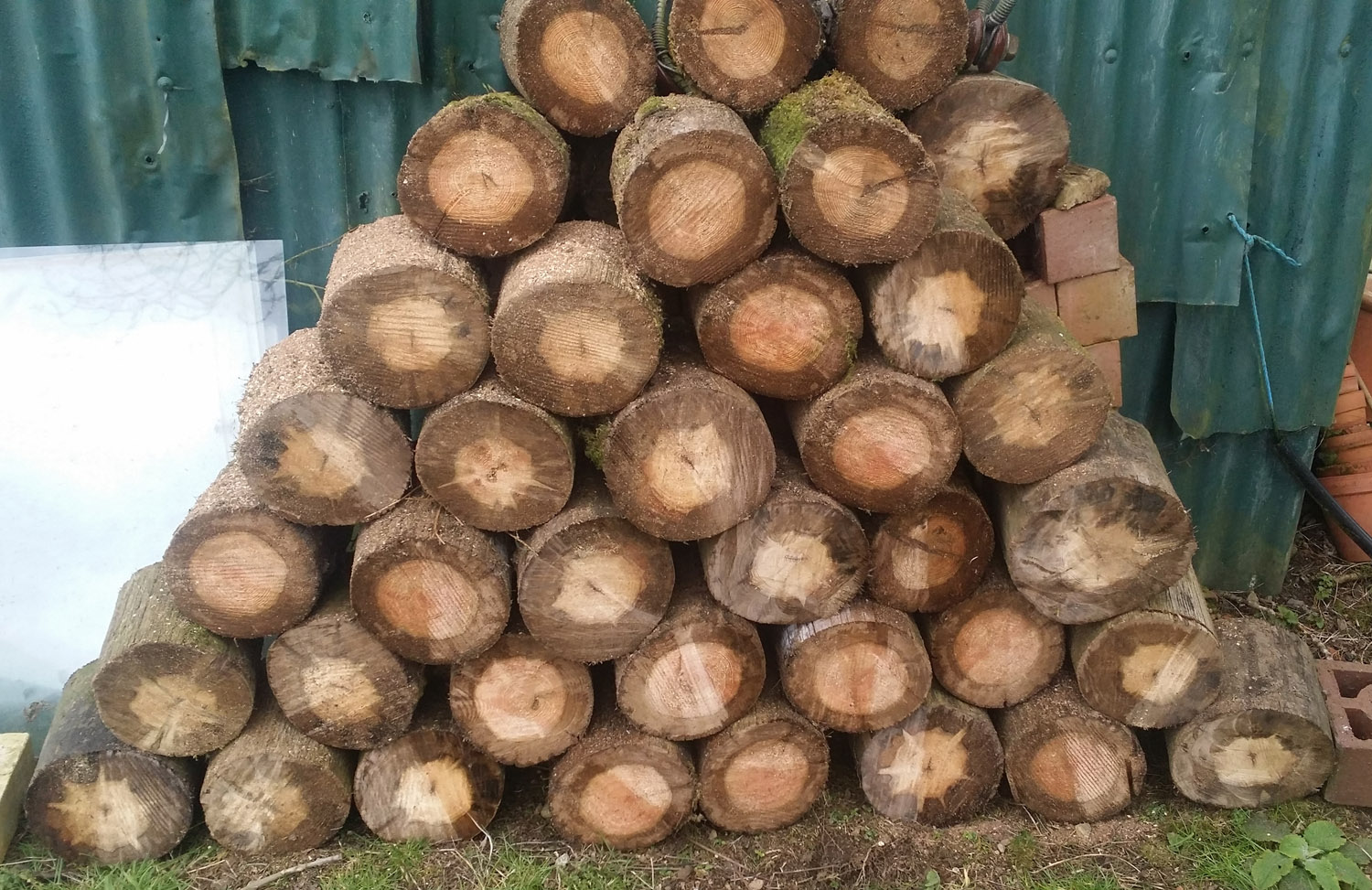
This story didn’t have a happy ending, and appreciators of fine telegraph poles should look away now. We received this photograph yesterday. An act of vile desperation, carried out without compunction by a soul-less Vauxhall (and Ryobi chainsaw) owner. Probably with a wood stove and who doesn’t mind the stink of burning creosote.
A Tall Pole
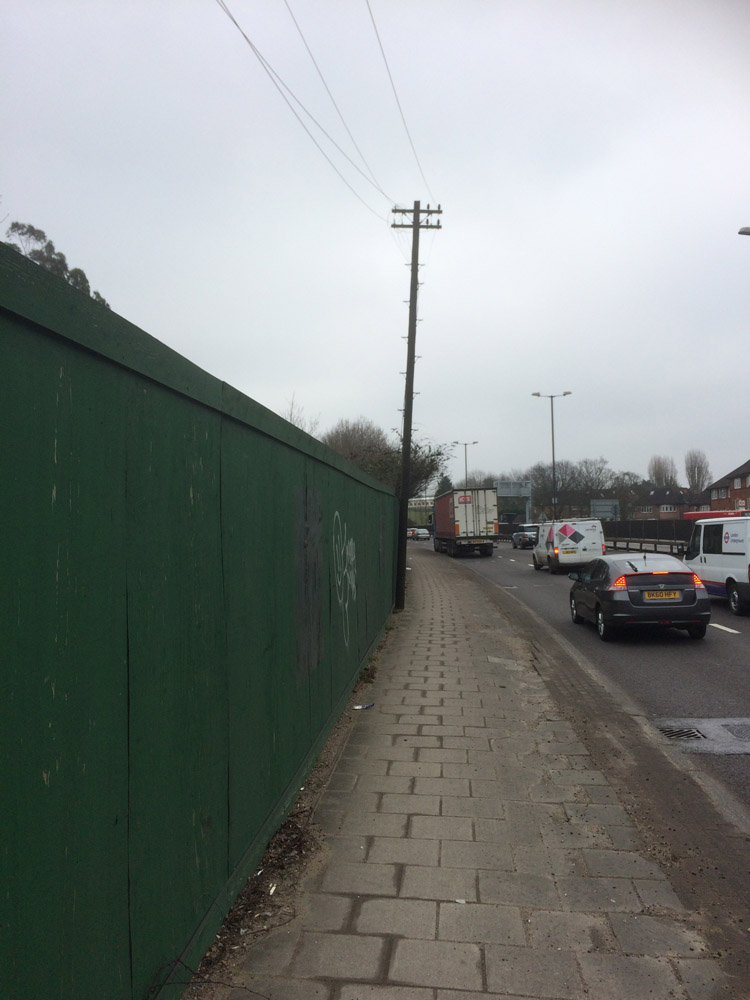
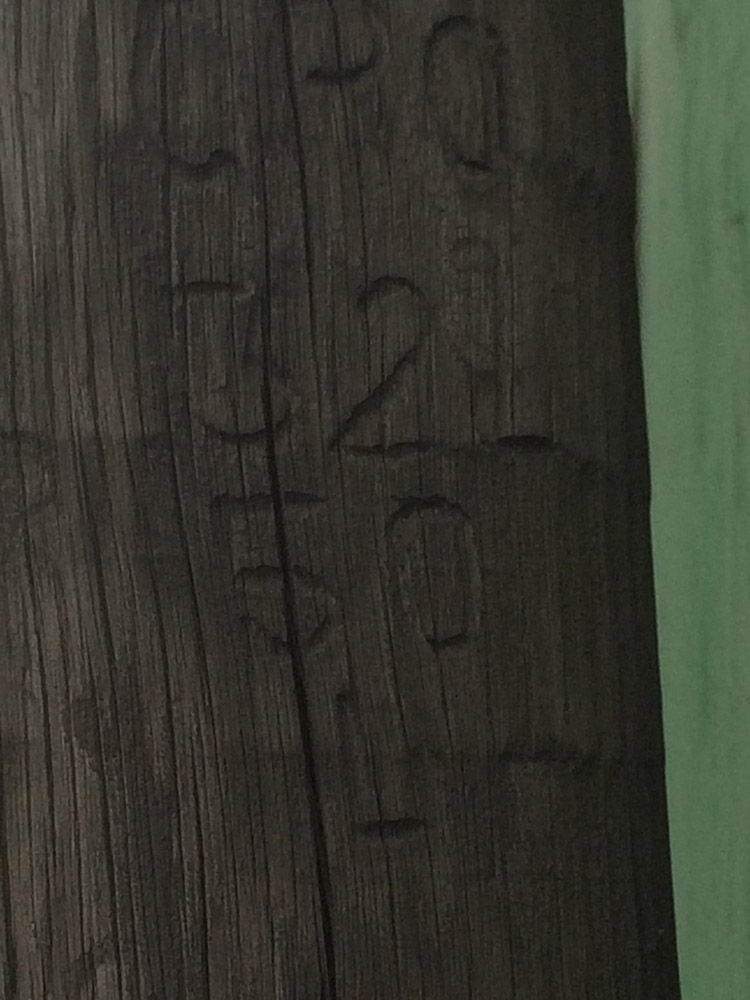
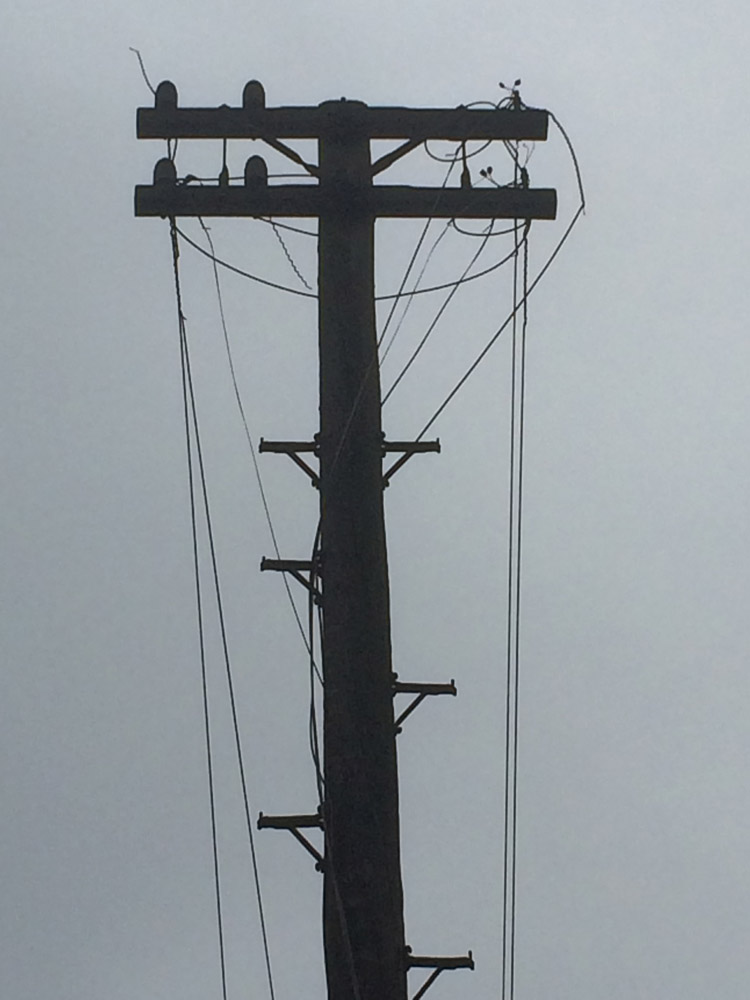
Since the demise of his 1938 LPTB Trolley Bus poles*1, Nude bee-keeper Geoff Hood has switched his considerable affections to telegraph poles. He tells us that he found this 1950 GPO extra-high pole with two crossbars feeding into some houses in deepest London N3. “Just thought it worthy of appreciating” he says. I agree Geoff. And since these pictures arrived into the not-inconsiderable mail system here at TPAS towers, I have endeavoured to appreciate them at every opportunity. I managed an hour before the Archers came on the wireless this evening, then I did another 10 mins after my bath. And I’ll try and get another few minutes appreciating in before I go to bed. I’ve asked my wife to have a go too when she gets a minute. But she said she’s still busy appreciating one of them that John Brunsden sent in February. Blimey, it’s all go here !


*1 See here.
Raspberry Poles
I had just had a really bad day – First my pencil fell off my desk. Then my wife accidentally put sugar in my tea and then I went and fed the cat twice because she lied to me that she hadn’t been fed. But then this photo came in by email and I found I was moved to tears at the joy it brought back to me following such a traumatic and difficult day.
This is from Chris Jacquier over there in the internet. He (could be she, apologies for the misplaced pronoun if this is the case) is clearly an inventive gardener with access to proper telegraph pole bits – as those look like real arms to me and proper insulator pins. Chris’s introduction was rather enlightening…
Well, I suppose you chaps are harmless in your pursuit of telegraph poles but I do hope that the attached photograph of my back garden fruit patch does not completely unhinge any of you.
Whilst I could not persuade the Domestic Authorities to allow a couple of poles for transmitting power to our shed village at the far end of the Jacquier estate, she did capitulate and surrender to the suggestion of cut-down arms and pots for use as raspberry cane supports.
Victory, of a kind, but probably at the cost of starting an arms scandal.
Sorry. CJ
Don’t apologise Chris. But whilst I am completely, overwhelmingly, meithering-my-wife-to-death sort of inspired by this, Mrs TPAS has yet to be convinced of its efficacy around her broad beans. A project for the forthcoming growing season I think and a chance to get some of my not inconsiderable collection of insulators out into the elements once more. Watch this space.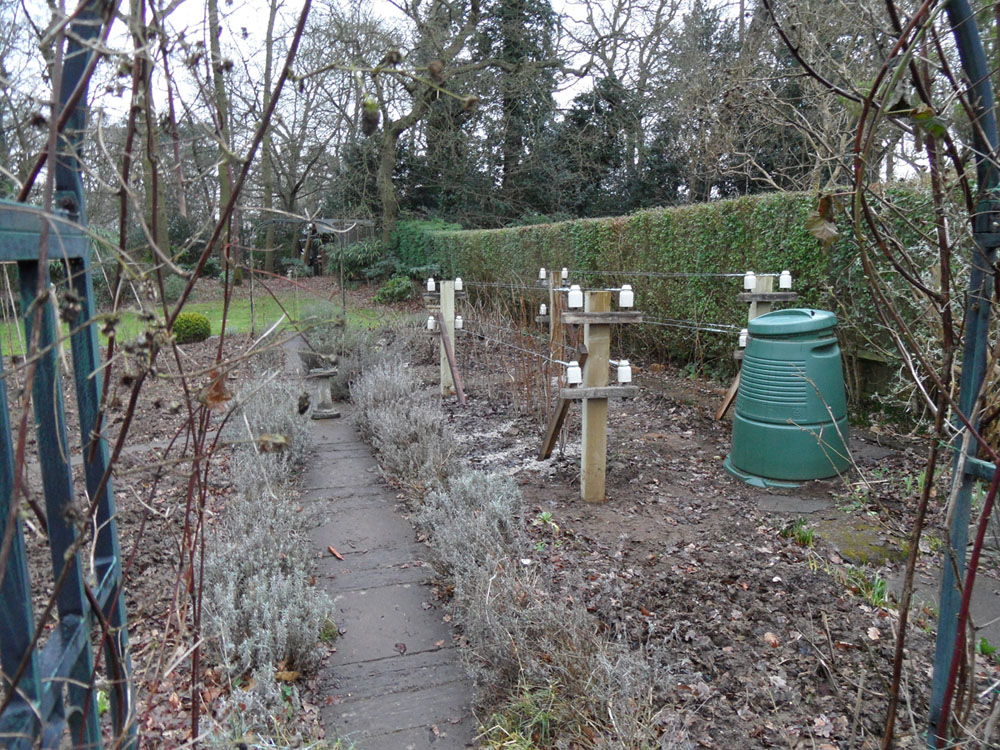
Pole of the Month – March 2016
Professor of Telegraphpoleology, Jake Rideout, has been out with his camera around his home town of Frome. As well as being one of the UK’s foremost telegraph pole academics, he has an awe-inspiring collection of insulators and is every bit the ceramic addict. He tells us:
This pole is unusual in construction as it is a double pole and carries six 33,000v lines which split apart into two separate pole routes about a mile up the line. The first image shows the pole in all its glory, the second a close up of the top section. I am unsure what the mesh is for between the two poles.
As well as terminating six high voltage lines, the pole also contains a total of 48 insulators, including the common porcelain discs, lightning arrestors, strain insulators on the stays and lead-in insulators, in both polymeric rubber and brown porcelain.
It is also interesting to note that each of the three large brown lead-in insulators on the right hand side of the pole are all supported by four smaller insulators. I own one of these smaller insulators which was retrieved from a substation near Gloucester by another insulator-fanatic. I have shown this in the third image. It measures 3.5″ tall and 5.25″ wide and is quite heavy, probably because of the two metal caps cemented onto each end. It was made by the London based company Bullers Ltd some time in the ’60s.
There are several poles similar to this one located in Frome, which all terminate at the substation near to this one. This one is located some distance from the same substation but I expect it is still linked to it somehow.
A wonderful pole Jake, excellent info and a worthy P.O.T.M. Though strictly speaking it’s Pole of the Whenever we remember to do one. But that would be P.O.T.W.W.R.T.D.O.


Metal poles in Somerset
Look, I know our esprit de corps is “tall, wooden, sticky-uppy and with wires out the top”, but sometimes, metal just floats that boat, ticks that box, flickers that flame.
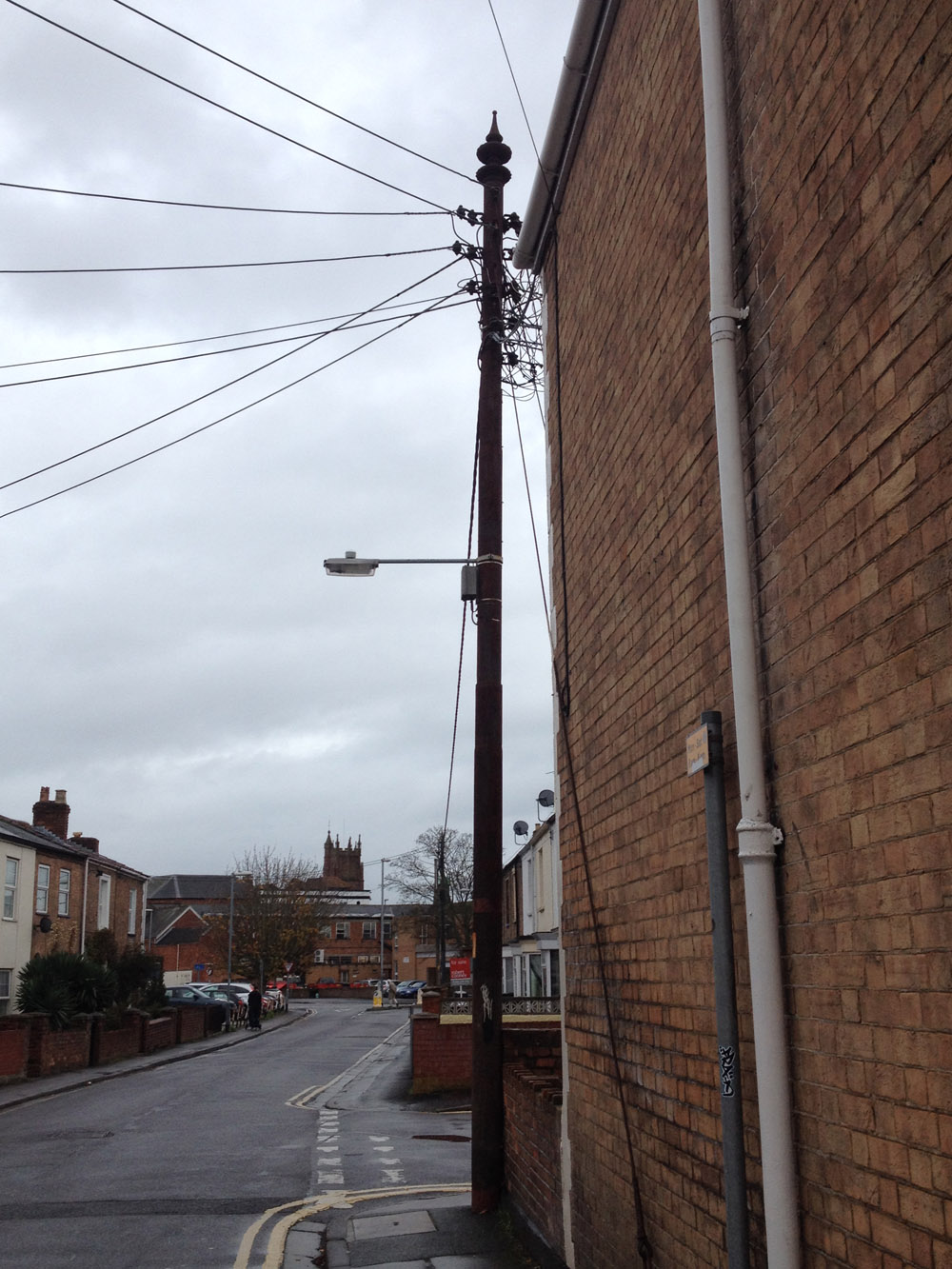
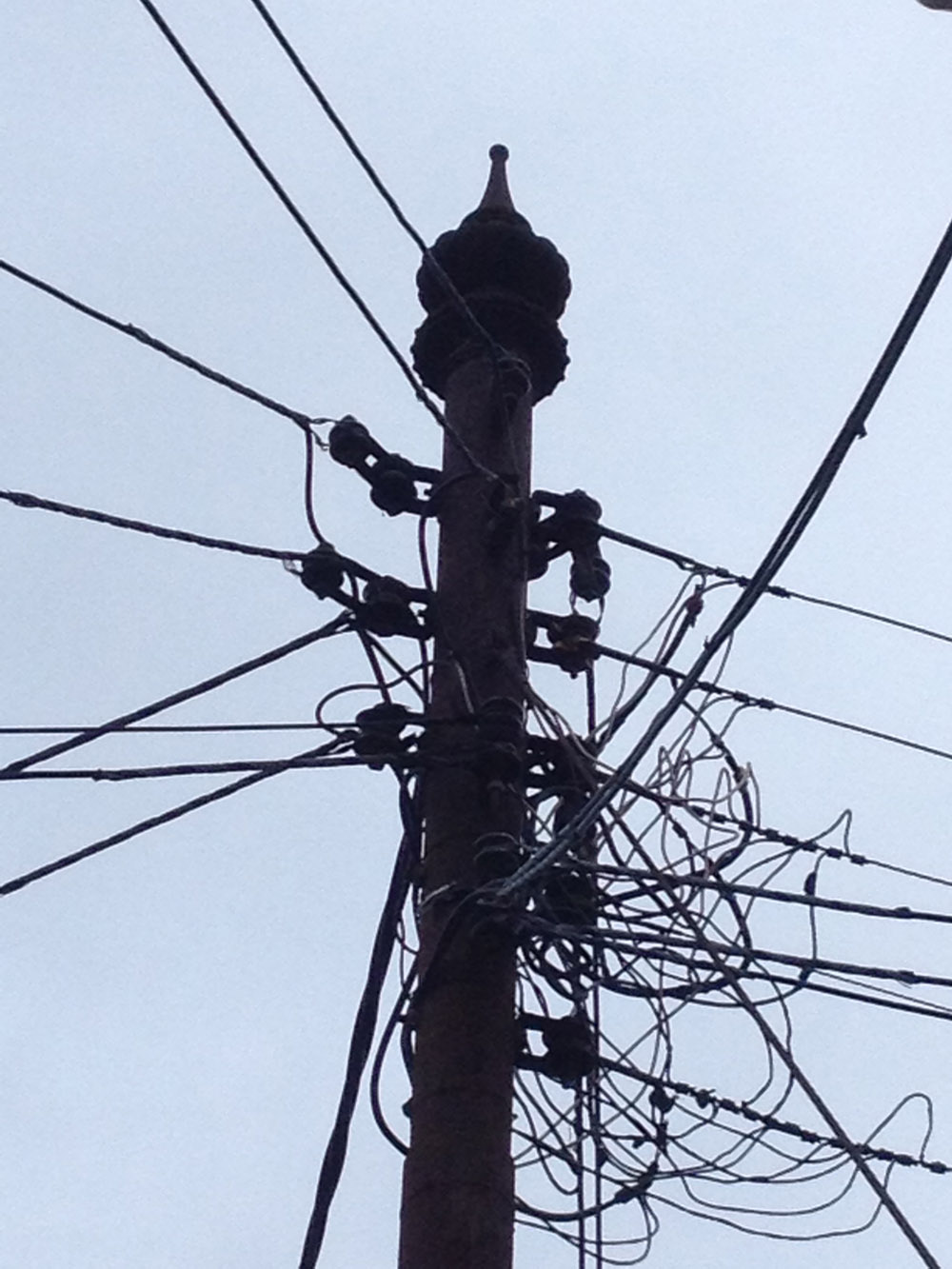
Old friend and honorary memberof these sage pages, John Brunsden (#0469H), sent us these pics of this finialed metal job on the corner of Wood Street & Greenbrook Terrace, Taunton, Zummerzet. He suggests we Google* street map it and pretend we are there. Have done already John. Many thanks.

The way to London (revisited)

Our most acutely reminiscient readers may remember our article Pointing the Way Toward London. Where we espoused and then propagated the notion that the crossarms on a telegraph pole will always align towards London.
Well, Phil from Occamhome over there in Aol wrote in with further proof if it were needed.
Sire,
Re ” Pointing the Way Toward London”….
Further proof (if required) is given when John Mills & Will Hay are being chased in a car in the film “The Black Sheep of Whitehall” 1942. John Mills notices the cross arms are on the London side so it must be true…..
And so now, indeed, it IS true.
Nude bee keeping
This week I have had an extended discourse and exchange of photographs with Geoff Hood. Geoff keeps bees, and likes to tend to them wearing just his battered, wrinkly and ageing set of Emperor’s new clothes. Like swimming in the arctic ocean, I imagine meithering a load of bees whilst wearing the sheerest of invisible fabrics can make one feel fully alive. We are similar, Geoff and I, in our pursuit of naturist activities. I have been known to remove all my clothing shortly before taking a bath. I also have a penchant for nude arc-welding.
Anyway, our exchange was in three parts :
1. Geoff is a fan of LPTB Trollybus poles. Of the 1938 variety. And he found us through his research into sticky-uppy things – there we are with the naturism again!*1 He tells me there are only two left – in Ferry Lane, Tottenham. These poles meet all our appreciating criteria in that they are tall, sticky-uppy and wooden, except that they carry no wires. But 3 out of 4 is good enough for me, and the fact that there’re only these two left means they need appreciating all the more.


Here we have different views of the same two poles. Geoff says they were used up until 1960 as 600A DC, later 240V DC trolleybus poles. He points out the light shield for train drivers in the 3rd photo. Apologies to that famous, non tax-paying search engine company whose photos we have purloined for educational purposes.
And so to next part of our exchange:
2. A collection of photos of various track-side poles in Sri Lanka. Now some of these are a bit out of focus. This is either because Geoff was in a fast-moving train at the time, or because his hands were shaking following an extended session of bee-keeping whilst nude. You decide. In no particular order of telegraphic scrumminess. Enjoy.
{rapidgallery}srilanka{/rapidgallery}
3. Our final exchange was a set of photos with a question: “What’s the purpose of the finials on the older poles like the one I am talking to you now? Did they hold cables for the old ceramic pots see photo or just rain protection? It is an quite old GPO pole 1950 36ft but still has a green climeable inspection plate 2013, the rest of the street were replaced in 2000.”
Well, as far as I know, wooden finials were a 1930s fashion thing – from a time when form actually over-ruled function. The good old days, I think they’re often referred to. But this being a 1950 pole, our readers may know different.
{rapidgallery}geoffhood{/rapidgallery}
*1 ba-doom…tish!